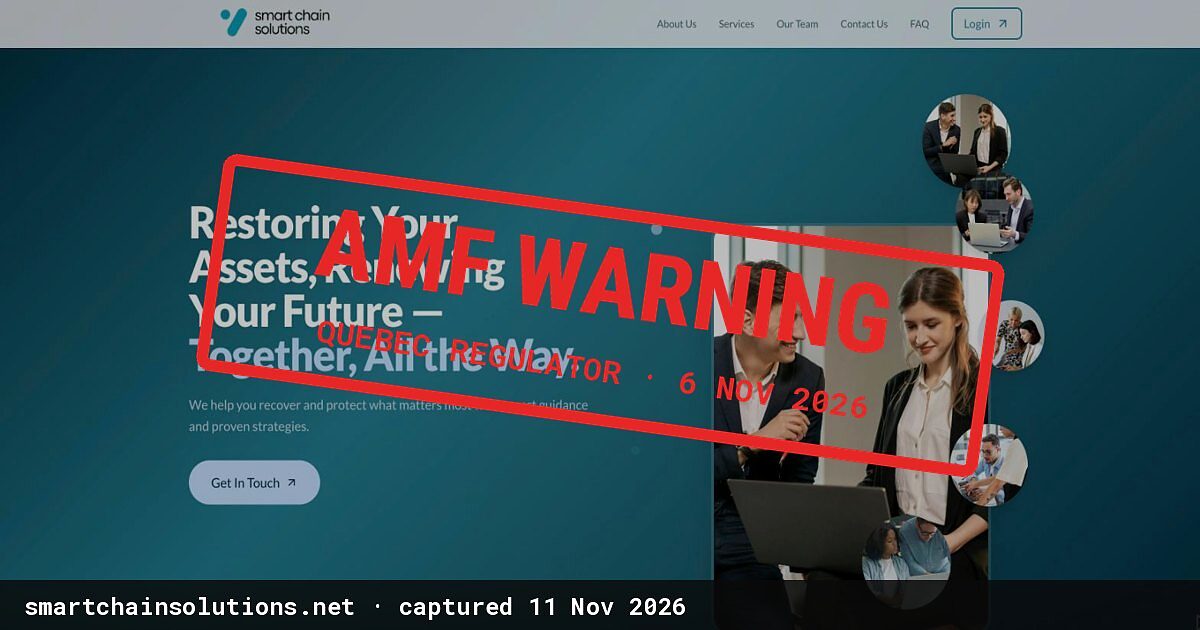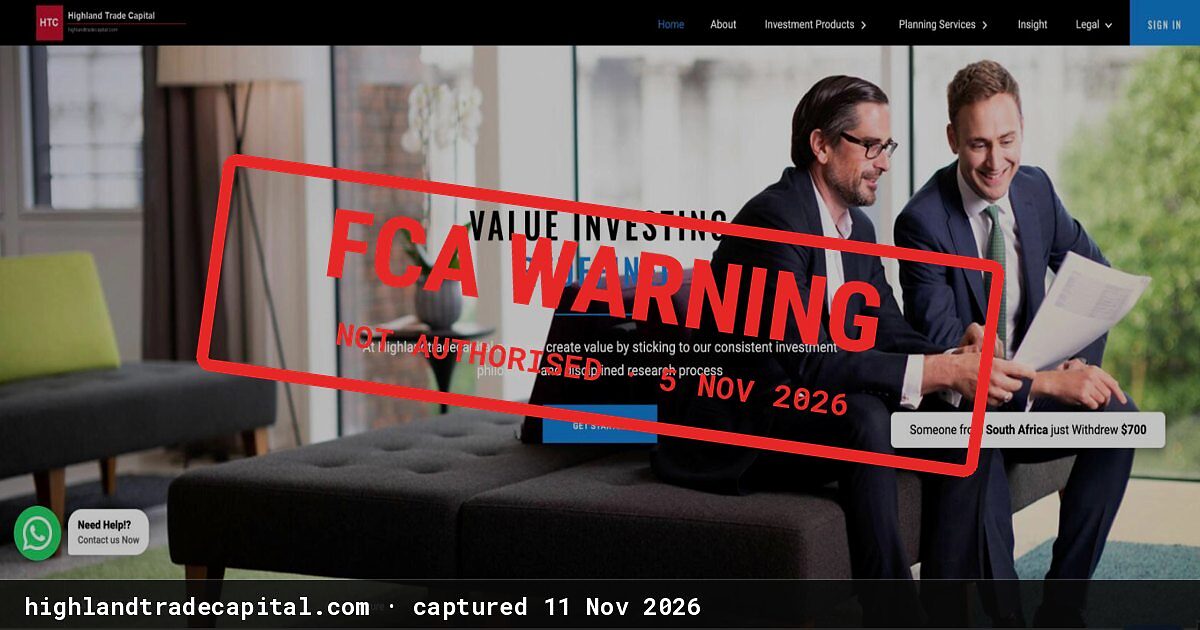
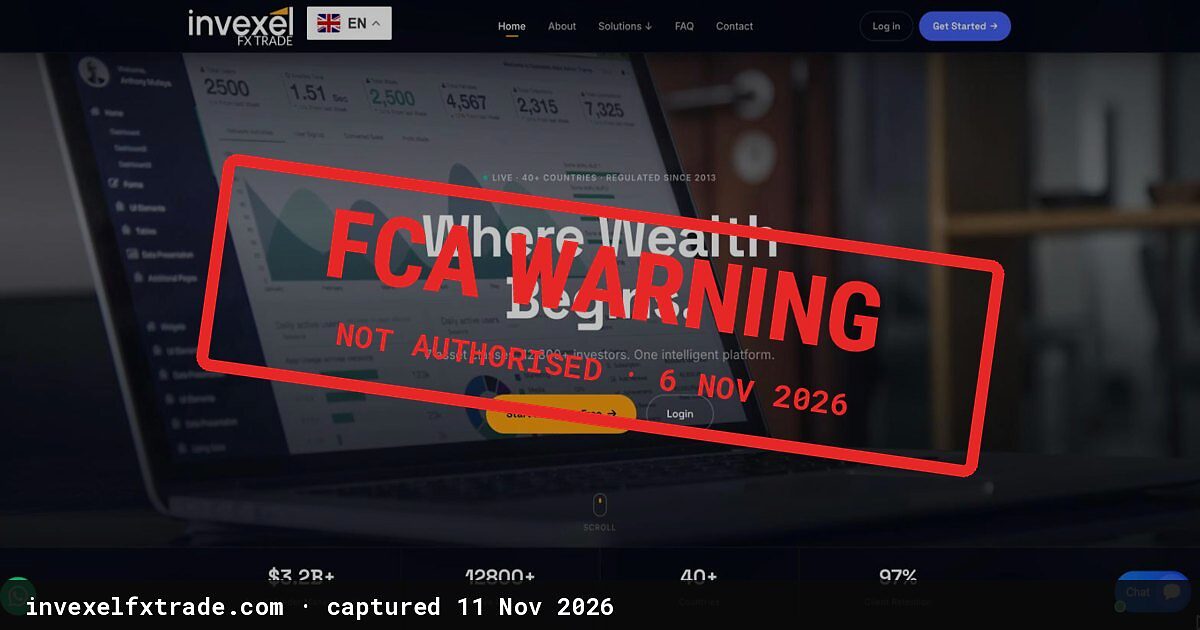
Updated 11 November 2026. Screenshots taken that day.

Claim by claim
| Regulated since 2013 | Domain invexelfxtrade.com registered 30 August 2026. No regulator or licence number named. |
| $3.2B+ assets under management | No company number, auditor or address shown. |
| 12,800+ active investors | Ten weeks after the domain existed. |
| Fixed returns | 8% after 24 hours, 16% after 24 hours, 33% after 48 hours, “principal included”. |

Run the numbers
If 16% every 24 hours were real and you reinvested for one month, $500 would become roughly $43,000. Real markets do not work like that. Fixed, very high, very short-term returns are the signature of a scheme that pays early investors with later investors’ money, until it stops paying anyone.
This is a regulatory warning, not a finding by any court.
What “principal included” really means
The plan cards promise your original deposit back on top of the profit. In a real investment, the money you put in is exactly what is at risk. A platform that guarantees both the principal and a fixed return in 24 hours is not describing trading; it is describing a promise it can only keep while new deposits keep arriving. When those slow down, withdrawals are usually the first thing to stop, often followed by requests for a “tax” or “fee” to release the balance.
If you have already deposited, stop sending money, keep screenshots of the site and every payment, and contact your bank or card provider straight away. The sooner a payment is reported, the better the chance it can be stopped or traced.
Don’t take our word for it. Look it up:
| If you have already paid | |
|---|---|
| 1 | Ask your bank to flag the payee as fraudulent. |
| 2 | If you gave remote access to your computer, disconnect it and get it checked. |
| 3 | Gather every email and contract into one place. |
| 4 | Report to the police and to your bank’s fraud team. |
Source: FCA warning list (fca.org.uk), 6 November 2026. Domain date from the public RDAP record. Website captured 11 November 2026.