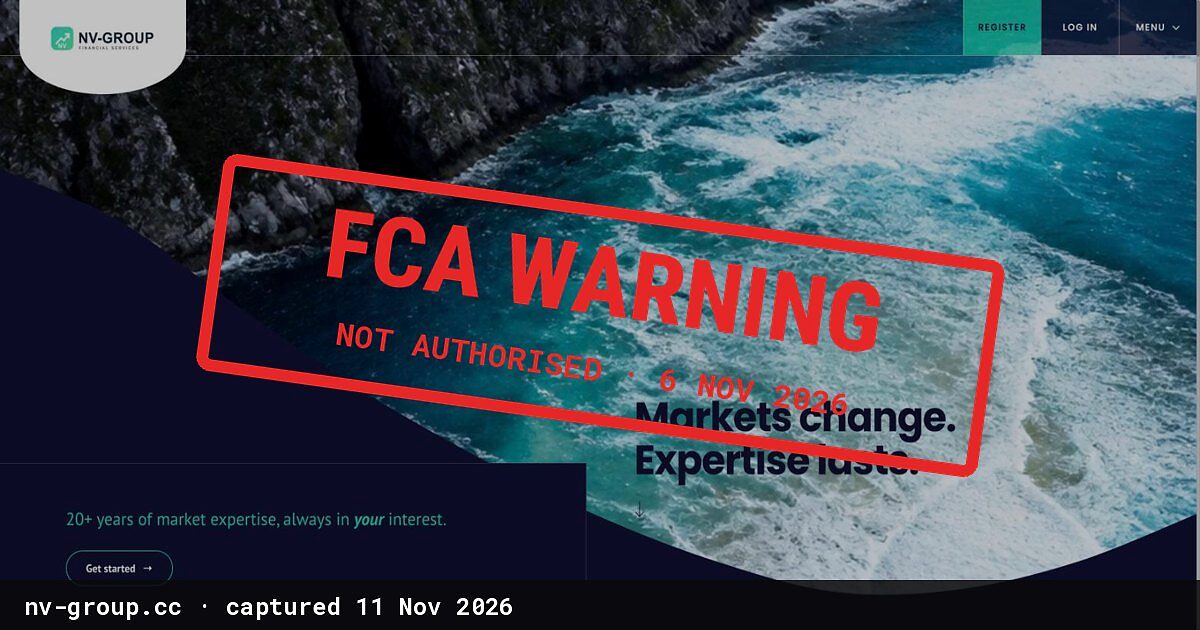
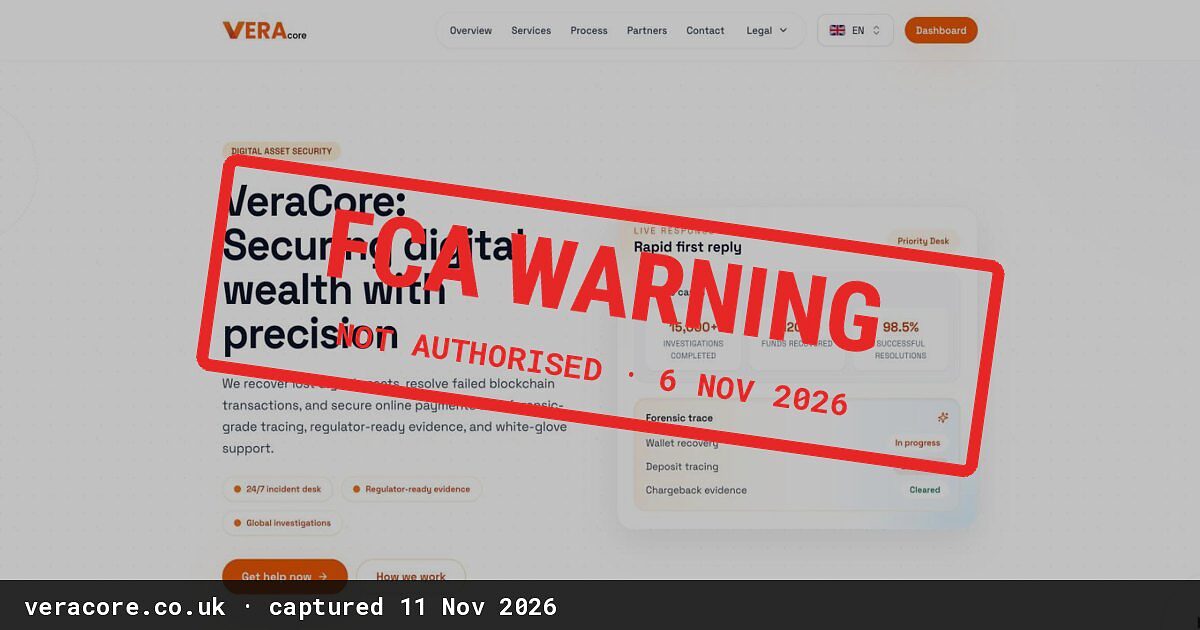
Updated 11 November 2026. Screenshots taken that day.
FCA warning: not authorised
This one is different. VeraCore Finance does not sell trading. It sells recovery, to people who have already lost money. On 6 November 2026 the UK Financial Conduct Authority added it to its warning list.
The pitch
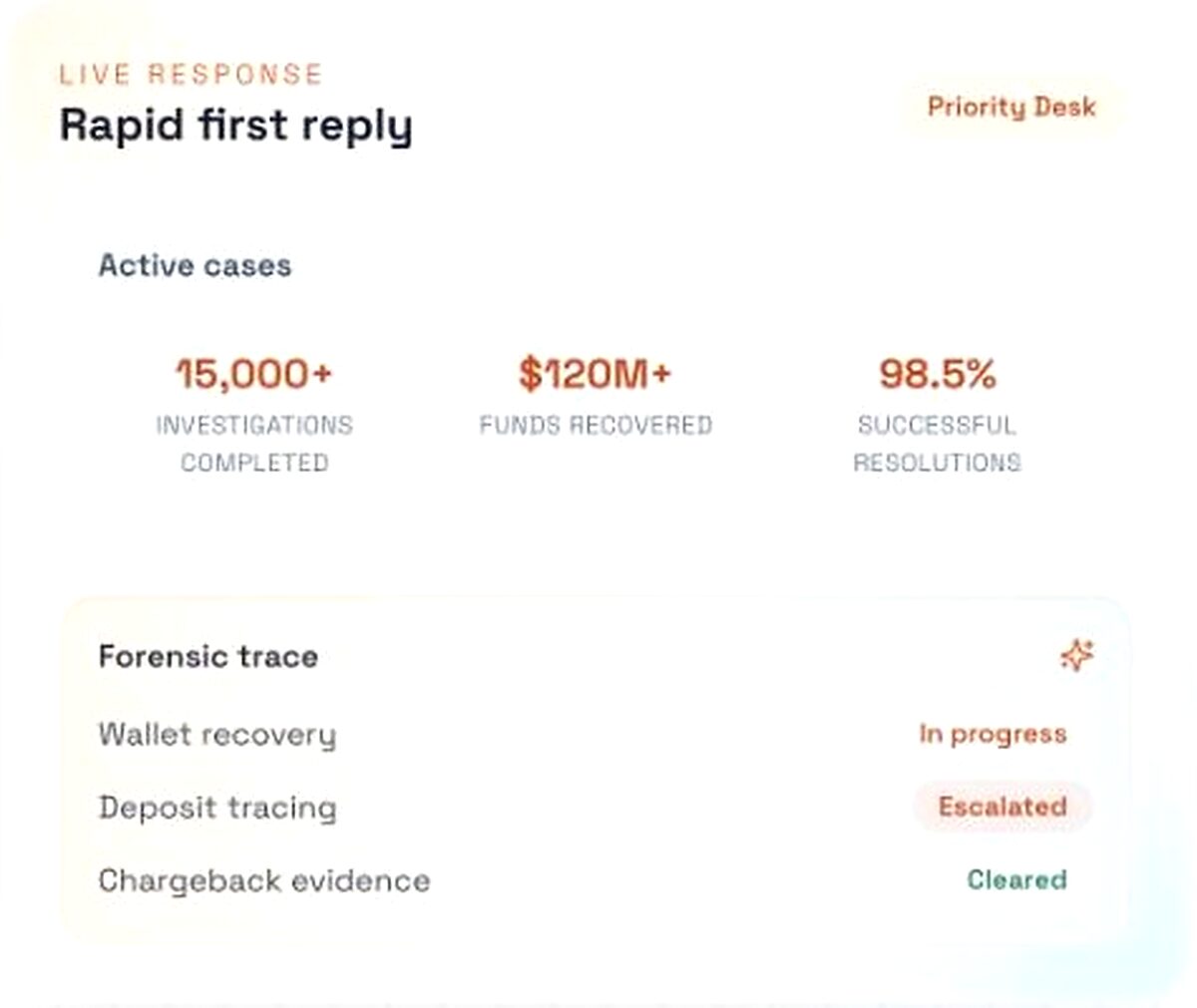
“We recover lost digital assets, resolve failed blockchain transactions, and secure online payments.” The homepage shows 15,000+ investigations completed, $120M+ funds recovered and 98.5% successful resolutions, plus a “Priority Desk” and a live-looking “forensic trace” panel.
The record
- FCA warning list: 6 November 2026.
- Domain veracore.co.uk registered: 1 December 2025, under a year ago. Fifteen thousand investigations in eleven months would be over 45 a day.
- Address given: a serviced-office building in the City of London.
Why recovery firms deserve extra caution
Once a crypto payment is sent, nobody can simply reverse it. Recovery offers that arrive after a loss are one of the most common follow-up scams: the victim pays again, for help that never comes. A 98.5% success rate is not something any honest investigator could promise. This is a regulatory warning, not a finding by any court.
How to spot a recovery pitch
Recovery offers tend to share a script. They know roughly how much you lost. They mention blockchain tracing, exchanges and “regulator-ready evidence”. They ask for a fee, a percentage or a “case activation” payment before any money comes back. Some even claim to work with the police. Real investigators and lawyers do not cold-call victims, and no one can guarantee a result. If VeraCore Finance, or anyone else, offers to recover lost crypto for an upfront fee, treat it as a second attempt to take your money.
Thirty seconds that could save your savings.
Search the name and the regulator before you deposit: Google · Bing · ChatGPT
| If you have already paid | |
|---|---|
| 1 | Contact the bank or exchange that sent the money and explain it was a scam. |
| 2 | Expect follow-up calls offering help for a fee, and hang up. |
| 3 | Write down dates, amounts and names while you remember them. |
| 4 | Report the website and phone numbers to the police. |
Source: FCA warning list (fca.org.uk), 6 November 2026. Domain date from the public RDAP record (Nominet). Website captured 11 November 2026.