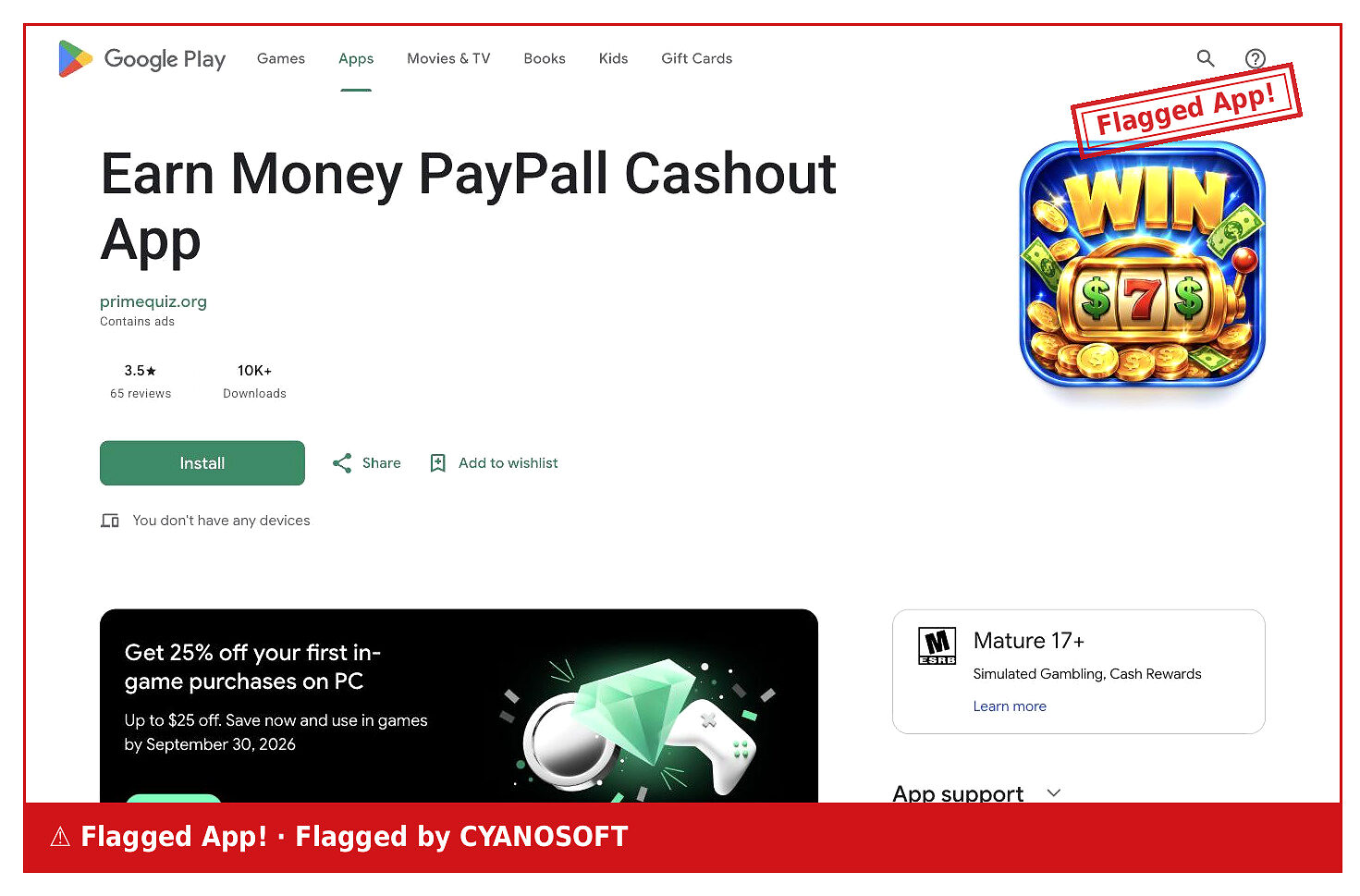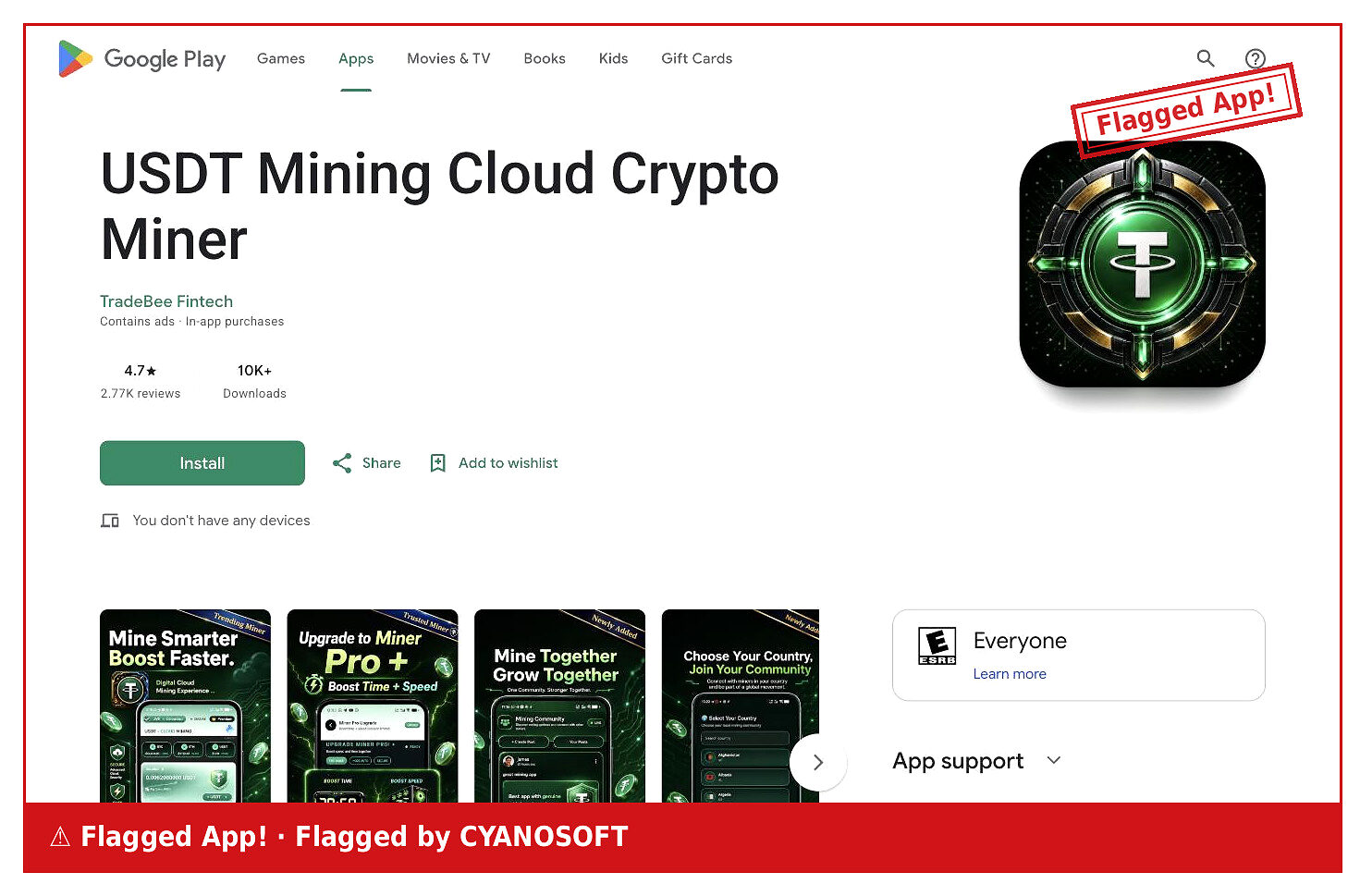
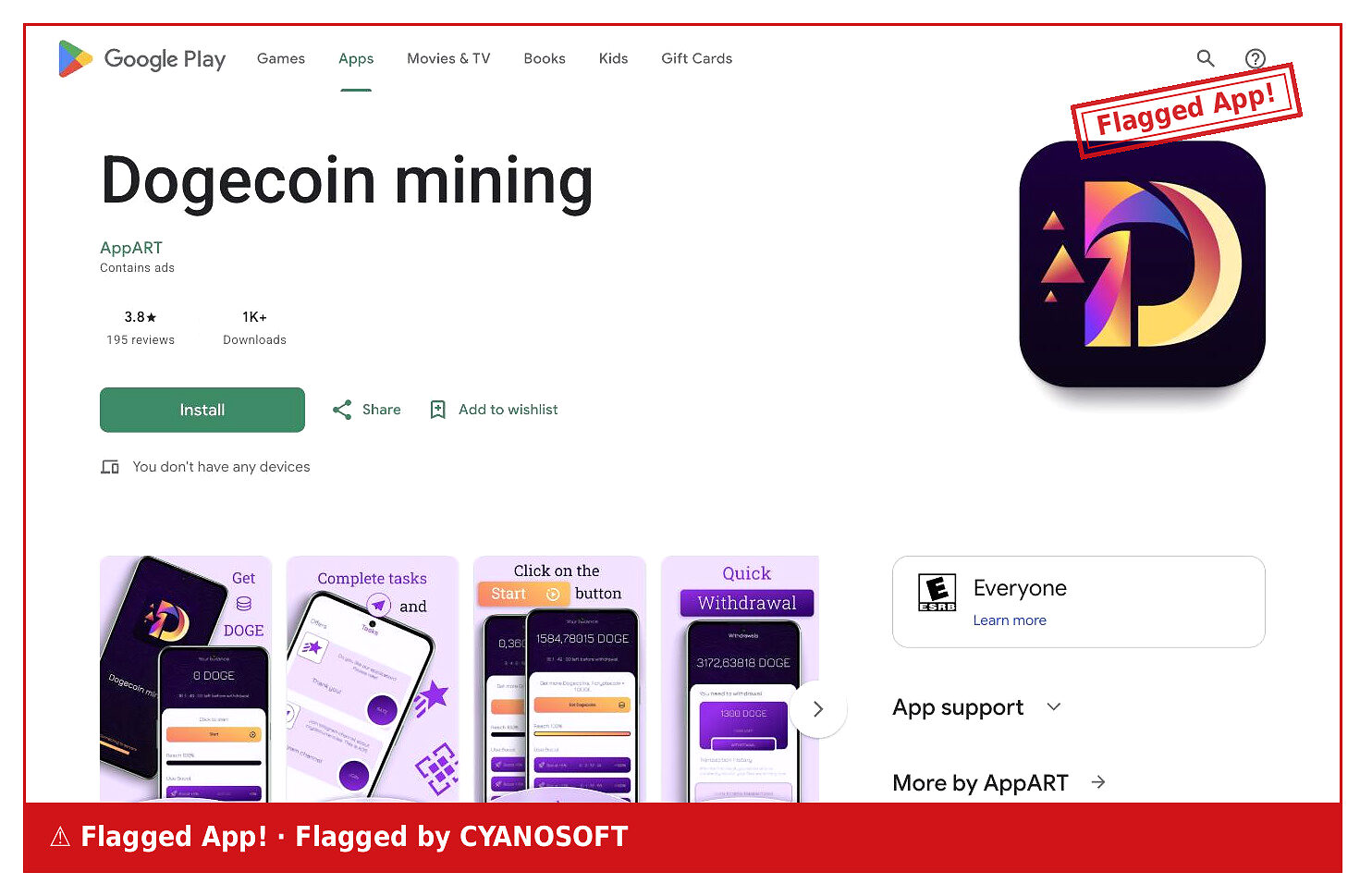
Verdict up front. A reviewer of this app reports that the wallet it routes payouts through rejects codes from all four apps published by the same developer. Another watched his balance reset to zero at the moment he tried to withdraw. Do not mine here.
Verified evidence — checked 15 September 2026
- The listing — 1,000+ installs, 195 reviews, rated 3.8. Published by AppART, an account in the name Алёна Пивоварова, contact info@appartart.ru, site appartart.ru.
- Four apps, one wallet, all rejected — The Almighty Father: “The wallet recommended does not accept codes from all 4 apps from this company.” The same reviewer reports the free wallet reset never advancing past day one.
- The balance went to zero — Fred Bloggs: “I went to withdraw at the required amount of coins and all my doge coins disappeared and went back to zero.”
- A reviewer asks the right question — Ayomide Olayiwola: “I don’t think they pay… is it possible to actually withdraw. which wallet can we use to withdraw that doesn’t ask for ridiculous amount of money.”
- Not described as a simulation — the listing does not present the app as a simulator. It is offered as cloud mining.
- What we did not verify — we did not install the app or attempt a withdrawal, and we have not tested the wallet ourselves. No regulator warning names this developer.
A balance that resets is not a failed payment
Fred Bloggs’s account deserves precision, because the distinction matters.
When a real payment fails, the money stays where it was. You see an error, the balance is untouched, and you try again. That is what a failed transfer looks like in every legitimate system, because the funds never moved.
A balance that empties while nothing arrives is a different event. Nothing was transferred and nothing failed — a number was set back to zero. For an app where the balance is a display value rather than a ledger entry, that costs the operator nothing and removes the obligation completely.
The wallet is the choke point
Like the other apps in this series, payouts here do not go to an address you choose. They go through a specific wallet, and that wallet is where users report the codes dying.
Once you see that shape, the individual app stops mattering. Four apps feeding one wallet that rejects all of them is not four independent faults. It is one mechanism with four entrances.
A reviewer worked this out from the inside, across the developer’s whole catalogue, which is more than any rating can tell you.
Two countries, the same design
This developer is Russian and publishes through a .ru domain. The developer behind USDT Miner and DOGE Miner, which use the same paid-wallet redemption, is Armenian.
Different countries, different names, unrelated accounts — and the same monetisation design. That points at a shared toolkit circulating among developers rather than at one operator running everything, which is worse news for anyone searching for a “safe” alternative in this category.
How to test any mining app in five minutes
Find out, before you start, exactly how the app pays: to an address you supply, or through something else. If the answer is anything other than your own address, stop.
Then open the developer’s other apps and read their newest one-star reviews. Users who have tried several of an operator’s products see the pattern first, exactly as they did here. We take the same approach with brokers — see our piece on a warning that covered three domains at once.
If you have already paid in
Do not buy a wallet or pay anything to release a balance, and do not keep mining in the hope the reset was a glitch. Screenshot your balance now, and again after any withdrawal attempt — a before-and-after pair is the clearest record of a reset. Keep any codes and wallet addresses you were given; if you paid for anything by card, ask your bank about a chargeback while it is recent.
Beware the second approach. People who lose money this way are very often contacted again by someone offering to recover it for an upfront fee, sometimes posing as a lawyer, a regulator or the app’s own compliance team. That is a second fraud aimed at the same victim. No legitimate recovery service, and no regulator anywhere, asks you to pay before your money is returned.
Our verdict
A cloud miner that is not described as a simulation, whose payouts run through a wallet that reviewers say rejects codes from every app the developer publishes, and where reaching the withdrawal threshold is reported to zero the balance rather than release it.
The most telling detail is that a user had to try four of this company’s apps to see it. You should not have to. Read the developer, not just the app. Our coverage of a firm whose own contact details were impossible follows the same principle.