RLM Asset Strategy is an investment brand operating through rlmassetstrategy.com that Italy financial regulator CONSOB has publicly named as unauthorised. If you were asked to deposit funds with this operator, treat it as high risk and stop sending money immediately.
Why RLM Asset Strategy is flagged
On 23 October 2026 CONSOB added RLM Asset Strategy to its list of operators offering financial services to the Italian public without authorisation. Operating without a licence means there is no regulatory oversight of client funds, no deposit protection, and no formal complaints route. These operators typically promise steady high returns and then block withdrawals once a balance grows.
Domain and infrastructure signals
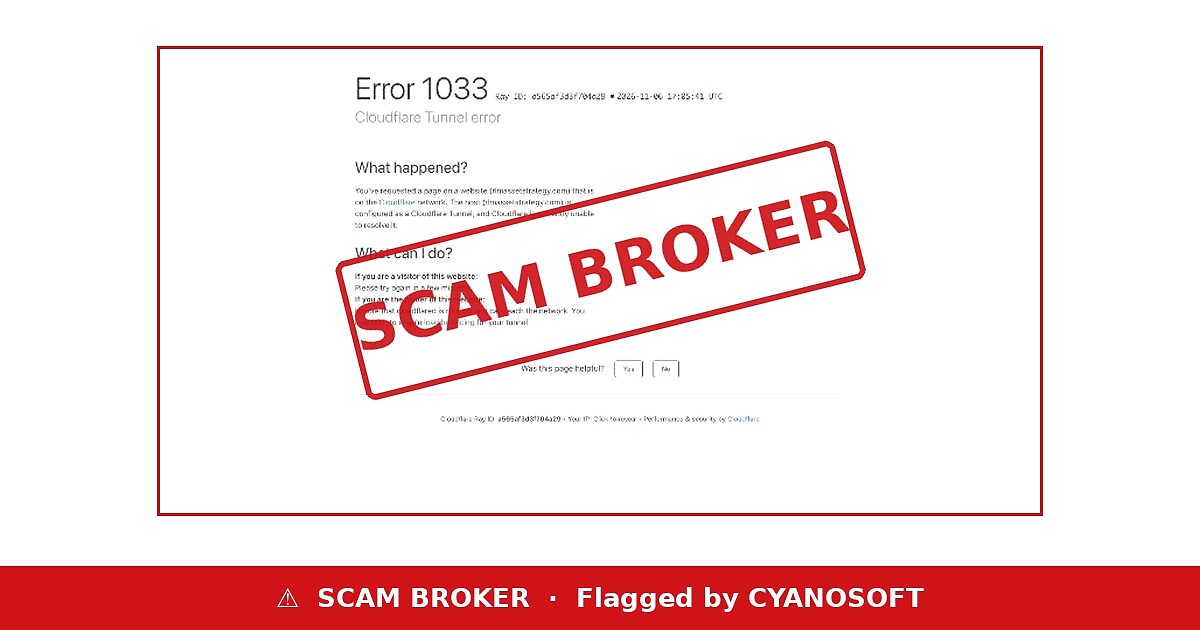
The rlmassetstrategy.com domain was registered on 9 September 2026, only weeks before the regulator warning. A brand marketing itself as an established asset manager while running on a domain that is barely a month old is a classic mismatch. When we checked the site it was unreachable behind a Cloudflare error, which is common for operations that rotate infrastructure quickly to stay ahead of warnings.
What to do if you deposited
Stop all further payments. Gather every record you have including transaction receipts, wallet addresses, chat logs and the names used by account managers. Report the activity to CONSOB and to your bank or card provider. If you need help organising a recovery case, Cyanosoft can review your evidence and guide the next steps.
⚠ Verified Warning Evidence
- Regulator: CONSOB (Italy) named it unauthorised on 23 October 2026
- Domain rlmassetstrategy.com registered 9 September 2026
- Site unreachable behind a Cloudflare 1033 error at time of review
- No valid licence under any EU regulator
Sources
Rechecked on 17 November 2026
On 17 November 2026 rlmassetstrategy.com returned Cloudflare “error code: 1033”, meaning the domain is set up behind a Cloudflare tunnel but the server behind it is not connected. The domain was registered on 9 September 2026.
The name sits close to Royal Asset Management at rlassetmanagement.com, which CONSOB named in September 2026 and which showed the same error. Similar abbreviated names and identical infrastructure errors are a sign of related operations.
When a platform disappears, its dashboard, balances and statements go with it. Anyone who deposited should gather their own records now: bank and card statements, crypto transaction hashes, emails, chat messages and the names and numbers of anyone who called. Those records are what a bank, the police or a regulator will ask for first, and they matter more than any screenshot of a balance that no longer exists.
If you already paid
- Call your bank today, tell them you have paid a fraudulent investment site and ask them to try to recall the payment.
- If you paid by card, ask about a chargeback.
- Change any passwords you shared and remove any remote-access app the caller asked you to install.
- Do not send ID documents or selfies to anyone connected with the site.
- Report the site to the regulator named above and to the police.
- Be wary of anyone who contacts you offering to recover the funds for an upfront fee.
How to check a CONSOB warning yourself
CONSOB, Italy’s market regulator, orders Italian internet providers to block access to unauthorised investment sites and publishes each order. Search the site name on CONSOB’s investor pages and check the registers of authorised intermediaries kept by CONSOB and the Bank of Italy. A firm licensed elsewhere in the EU must appear as passported into Italy. If the site has been blocked, it may reappear on a new address with the same design. Report the site to CONSOB and your bank.
How these schemes usually play out
Sites like this usually follow the same steps. First comes an advert, a social media message or a phone call. Then a small first deposit, often a few hundred dollars or euros. A dashboard soon shows fast profits, and an “account manager” pushes for a bigger deposit. When you try to withdraw, new fees appear: tax, insurance, verification or “unlocking” charges. Paying them never releases the money. At that stage, stop paying, keep every record, and report what happened.
Keep screenshots of the dashboard and your balance, the website address, every email and chat, phone numbers that called you, and every bank, card or crypto payment with dates and amounts. For crypto, keep the wallet addresses and transaction hashes. These records are what your bank, the police and the regulator will ask for first.