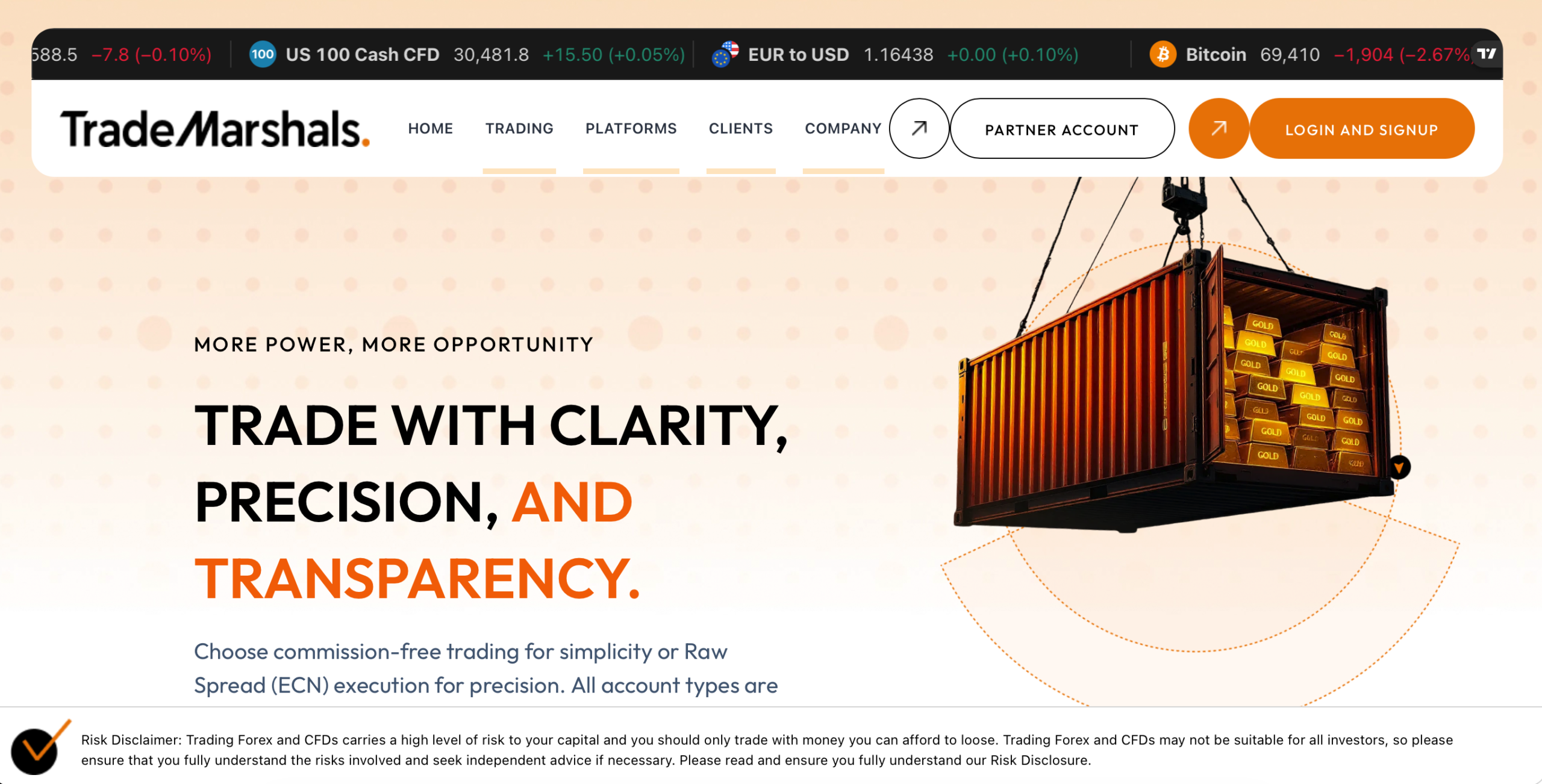
The online trading industry has experienced extraordinary growth over the past decade. Millions of investors now participate in forex trading, cryptocurrency investing, CFDs, commodities, and global financial markets through online brokerage platforms. While many regulated brokers offer legitimate services, the rapid expansion of online investing has also created opportunities for high-risk and potentially fraudulent platforms to attract unsuspecting investors. One broker that has recently raised significant concerns is Trade Marshals, operating through trademarshals.com.
At first glance, Trade Marshals presents itself as a sophisticated and professional brokerage platform. The website promotes trading opportunities across multiple financial markets, advanced trading technology, and investment solutions designed to attract both beginner and experienced traders. Like many online brokers, the platform utilizes modern branding and persuasive marketing materials to establish credibility. However, experienced investors understand that a polished website should never be considered proof of legitimacy or investor protection.
RECLAIM YOUR FUNDS
One of the most significant concerns surrounding Trade Marshals is its apparent lack of recognized regulatory oversight. Regulation remains one of the most important indicators of broker legitimacy because licensed firms are generally required to comply with strict financial standards, maintain segregated client funds, and provide mechanisms for dispute resolution. When a broker operates without authorization from respected regulatory bodies, investors face substantially higher risks.
Independent broker investigations have highlighted concerns regarding the company’s regulatory status and have questioned whether Trade Marshals possesses valid authorization from major financial regulators. The absence of verifiable licensing information makes it difficult for investors to determine what protections may be available if disputes arise involving withdrawals, account access, or fund security.
Transparency is another area where concerns emerge. Legitimate financial institutions typically provide comprehensive details regarding ownership, executive leadership, physical office locations, licensing information, and corporate accountability. In the case of Trade Marshals, publicly available information regarding the company’s management structure and operational history appears limited, making independent verification more difficult for potential investors.
Another warning sign involves the relatively limited operating history associated with the platform. Newer brokerage websites often deserve additional scrutiny because investors have fewer years of customer feedback, regulatory records, and business performance available for evaluation. A short operating history can make it challenging to assess the broker’s long-term reliability and financial stability.
The online trading industry has repeatedly demonstrated that professional-looking websites can sometimes conceal significant underlying risks. Many high-risk brokers invest heavily in website design, marketing campaigns, and promotional materials while providing little transparency regarding their actual operations. Investors should always prioritize independently verifiable facts over marketing claims.
Aggressive promotional tactics represent another common concern within the online brokerage sector. Potential investors may receive repeated communications encouraging immediate deposits, larger account funding, or participation in exclusive investment opportunities. Such pressure-based marketing often discourages careful research and independent verification before financial commitments are made.
Many questionable trading platforms also emphasize potential profits while minimizing discussion of investment risk. Financial markets are inherently volatile and unpredictable. No broker can guarantee profits, eliminate risk, or consistently deliver successful outcomes. Investors should remain skeptical whenever marketing materials create unrealistic expectations regarding returns.
Withdrawal reliability is another critical factor investors should examine carefully. Across the online trading industry, many investor complaints follow a familiar pattern. Deposits are often processed quickly and efficiently, while withdrawal requests become delayed, restricted, or subjected to additional requirements. Testing withdrawal functionality with smaller amounts before committing substantial capital remains one of the most effective ways to evaluate a broker’s reliability.
Security concerns should also not be overlooked. Online trading platforms typically require users to provide highly sensitive personal information, including passports, proof of address documents, banking details, and identification records. Investors should ensure that any company handling such information operates under recognized compliance standards and strong regulatory oversight.
Another concern involves accountability. Regulated brokers generally operate within legal frameworks that provide avenues for consumer complaints and dispute resolution. Platforms operating without clear regulatory authorization may leave investors with significantly fewer options if problems occur involving account access, withdrawals, or disputed transactions.
The growing popularity of cryptocurrency trading has created additional opportunities for fraudulent operators. Many high-risk investment schemes incorporate cryptocurrency payments because such transactions can be more difficult to reverse than traditional banking methods. Investors should exercise additional caution whenever cryptocurrency deposits are heavily promoted.
Education remains one of the strongest defenses against investment-related fraud. Investors who independently verify licenses, research company histories, examine customer feedback, and conduct extensive due diligence are generally far better protected from avoidable financial losses.
RECLAIM YOUR FUNDS
Risk management should always remain a priority. Investors should never deposit money they cannot afford to lose, especially when dealing with platforms that have generated questions regarding regulation, transparency, or operational legitimacy.
Trade Marshals serves as an important reminder that professional branding and attractive investment opportunities should never replace independent verification. Regulation, transparency, accountability, and operational history remain the most important factors when evaluating any online brokerage platform.
Conclusion
The concerns surrounding Trade Marshals highlight many of the risks that continue to exist within the online trading industry. As online investing becomes increasingly accessible, investors are exposed to a growing number of platforms that may appear professional while offering limited transparency and uncertain investor protections.
One of the most important concerns involving Trade Marshals is the apparent lack of clearly verifiable regulatory authorization. Regulation serves as a critical safeguard because it helps ensure that brokers comply with financial standards designed to protect investors. Without recognized oversight, investors may face significantly greater risks if disputes arise involving withdrawals, account access, or fund security.
Transparency concerns further increase uncertainty. Investors should always be able to verify who operates a brokerage platform, where it is located, and what regulatory protections apply to client funds. Limited publicly available information can make it difficult to evaluate a broker’s credibility and long-term reliability.
Withdrawal reliability remains another essential consideration. Across the online trading industry, withdrawal-related complaints frequently represent one of the strongest indicators of potential risk. Investors should carefully evaluate a broker’s withdrawal procedures and test the process before committing substantial capital.
The broader lesson extends beyond Trade Marshals itself. Every online broker should be evaluated based on regulation, transparency, operational history, customer experiences, and accountability rather than marketing claims alone. Responsible investing requires patience, skepticism, and thorough research.
Financial losses are not the only risks associated with questionable brokerage platforms. Investors may also experience emotional stress, privacy concerns, wasted time, and significant challenges recovering funds once problems occur. Prevention remains far more effective than attempting recovery after losses have already been incurred.
Education continues to be one of the most effective tools against online investment fraud. Understanding how legitimate brokers operate helps investors recognize warning signs before committing funds. Investors who prioritize independent verification and proper due diligence are generally far better protected against avoidable losses.
As online investing continues to evolve, maintaining a cautious and informed approach remains essential. Platforms operating without transparent regulation or independently verifiable credentials should always be approached with extreme caution until their legitimacy can be fully confirmed.
In conclusion, Trade Marshals presents several warning signs involving regulation, transparency, accountability, and operational history. Investors should carefully verify all claims before depositing funds and prioritize brokers operating under strong regulatory oversight. Protecting your financial future should always take precedence over promises of quick profits or attractive investment opportunities.